Sad news that M$ are to acquire GitHub. I suspect I’ll start getting Windows adverts in my email inbox soon as my office uses GitHub
On the plus side, this LinuxJournal article has proposed some alternatives. GitLab is a good one and even mentioned on some job listings so I guess I’ll move my repos there.
Well, exam is done — for the most part it went okay. A few questions were a bit ambiguous and there were several regarding etcd and low-level tinkering with the kubelet — which I hadn’t had too much experience with unfortunately. I’m hoping I did OK, though…
With less than 24 hours to go before my exam, I’m going to spend those last hours going through the review questions and see if I can still remember the content.
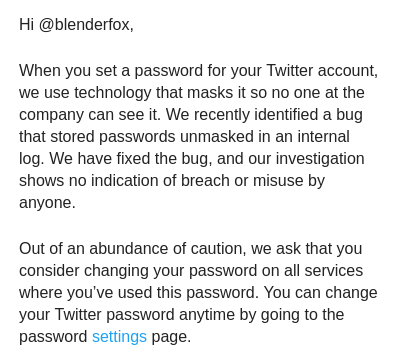
There is a new story doing the round about how Twitter found that it had stored user’s password in the clear in an internal log. Whilst reading it, I got this email from Twitter:
While this isn’t the first time a big company has done this (Github for one also did this), it seems unbelievable that a big company like Twitter would get itself caught out by this basic, common sense security practice. Pretty much every YouTube video and article about correctly handling passwords will tell you not to store them in the clear and only store them as hashes (with salts, preferably). Hashing algorithms are meant to be really difficult or impossible to reverse, meaning you can’t (easily) use the hashes to determine the original passwords.
Some examples from a quick YouTube search — Tom Scott’s video’s really good btw :), although is comment about “using login using Twitter and let them store your password for you” is a bit ironic :P
The fact that Twitter has our unencrypted passwords on disk… does this mean Twitter has been saving our original passwords before hashing them?
More to the point – whilst Twitter are quick to point out that no-one at the company can see the masked password, they don’t mention who has (or had) access to the unmasked passwords in the internal log. Or for how long…
Twitter users who had their accounts on private may not have been as private as they initially thought….




You must be logged in to post a comment.